A Castle Vector: A Designer’s Tool for Crafts and Graphics
The First Impression: Elegance with a Storybook Edge
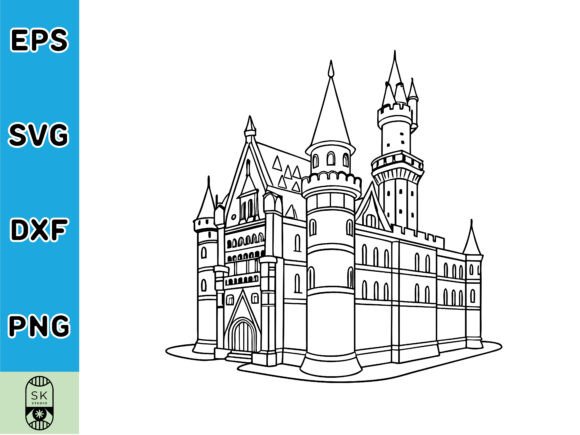
Opening the Intricate Castle Outline SVG Vector, my immediate thought is that it’s less a clipart and more a statement. It carries a specific mood—a blend of timeless elegance and intricate fantasy. The visual elements feel deliberate, each line suggesting a careful balance between detail and open space. This isn’t a generic castle; it’s a design asset with a distinct narrative style, leaning towards themes of heritage, craftsmanship, and imaginative luxury. It naturally fits clients in the realms of handmade businesses, boutique product lines, or brands built around storytelling, like a specialty tea company, a fantasy-themed Etsy shop, or a local historical event.
Applying the Vector to Real Client Projects
When a small business owner approaches me for a brand identity refresh or a seasonal campaign launch, my job is to find visuals that elevate their concept beyond the generic. This castle vector is a compelling candidate. For a logo design, its intricate outline could serve as a powerful, memorable symbol for a craft brewery or a bookstore, especially when paired with a sturdy serif font. In packaging design, it could become a beautiful repeating pattern or a focal emblem on a product label for artisan goods, adding a layer of visual trust and perceived quality.
Where It Excels as a Marketing Visual
Its strength lies in applications where detail can shine. Think large layout areas: a poster for a fairy-tale festival, a hero graphic for a website selling medieval-inspired jewelry, or a full-wrap design on a mug for a print-on-demand seller. As a decorative accent on invitations or as part of a themed collection for social media graphics, it provides instant cohesion. For digital sellers, it’s a prime asset for creating Pinterest pins or Instagram posts that feel curated, not cobbled together. In editorial design for a blog about history or crafts, it can break up text elegantly.
Careful Application: Avoiding Visual Clutter
However, as with any intricate graphic design asset, caution is needed. At very small sizes—like a tiny icon on a business card or within a crowded footer layout—the fine lines may become indistinct, losing their impact and potentially harming readability. Placing it on complex, busy backgrounds or in low-contrast designs will muddy its elegance. For minimalist branding or projects requiring ultra-clean visual hierarchy, this asset might compete too much. It’s not suited for sterile, professional corporate materials where simplicity is key; its soul is in the creative and the crafted.
The Designer’s Practical Checklist
Before committing this vector to a client’s commercial design project, I run through a series of real-world tests. First, I view it in pure black and white to ensure its form holds without color reliance. I check contrast by placing it on both light and dark backgrounds—a crucial step for website graphics or sticker designs. Previewing it at both small and large sizes confirms its scalability, a core benefit of a true SVG design. I place it on actual product mockups: a t-shirt design, a tote bag, a sublimation design for a coaster. A quick test print, even on standard paper, reveals if any lines are too fine for certain printing methods.
I inspect the file formats provided. The SVG editability is vital for adjusting stroke weight or isolating sections for a logo design. If PNGs are included, their transparency edges must be clean for overlaying on social media graphics or Canva templates. I experiment with typography pairing, comparing it against a classic serif font for tradition, a clean sans serif for a modern twist, a script font for whimsy, and a bold display font for merchandise. Finally, and most critically, I confirm the commercial licensing. Using a digital product for a client’s business or in a design bundle for resale requires unambiguous permission.
Impact on Brand Perception and Audience Engagement
Integrating the Intricate Castle Outline SVG Vector into a project isn’t just about adding a picture; it’s about steering the entire visual mood. It can significantly boost emotional appeal, tapping into feelings of nostalgia, adventure, or refined taste. For audience engagement, such a distinctive element makes graphics more memorable, encouraging shares and saves on platforms like Instagram. It contributes to brand consistency by offering a versatile, yet coherent, visual thread across packaging design, marketing visuals, and printable designs.
Ultimately, the right asset helps a final design feel polished and intentional. This vector, when matched with the appropriate client vision—a small business branding itself as a purveyor of handmade excellence, or a content creator building a fantasy-themed creative marketplace—can be that key piece. It moves the work from a basic product description to a cohesive, professional design story.